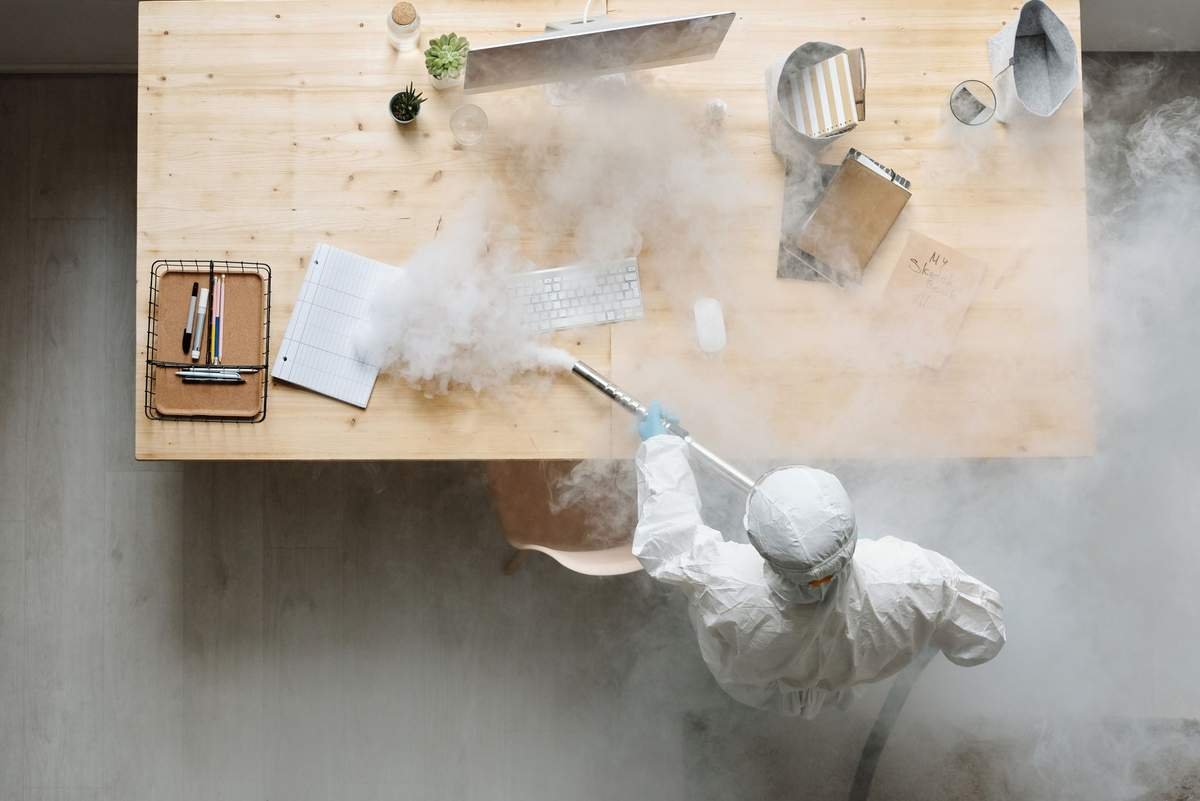
The Dust Doesn’t Lie
Walk into any home in Panchkula after a week of open windows during harvest season, and you’ll see it. A fine layer of particulate matter on every horizontal surface. It’s not just dust—it’s pollen, soil particles, vehicle exhaust residue, and whatever the wind carried from the construction site three sectors over.
Most people grab a feather duster. They wipe visible surfaces. They vacuum the carpet. The house looks clean.
But run your finger along the top of the door frame. Check the track of your sliding balcony door. Pull out the refrigerator and look at the coils. That’s where the real story lives.
Why Panchkula Homes Need Different Care
The Geography Factor
Panchkula sits at the foothills of the Shivalik range. That location creates specific cleaning challenges you won’t find in Chandigarh proper or the plains beyond.
Morning dew carries mineral content from the hills. It settles on windows, balconies, and exterior surfaces, leaving deposits that standard glass cleaners barely touch. By the time you notice the haze, etching has already begun.
Monsoon humidity penetrates deeper than surface moisture. It finds its way into grout lines, under sink cabinets, behind appliances—places where airflow rarely reaches. Mold doesn’t announce itself with a musty smell immediately. It establishes colonies in silence.
Winter inversion layers trap pollutants at breathing level. The same air quality indexes that make headlines settle into your upholstery, your curtains, your mattress fibers. You’re not just living with outdoor pollution—you’re sleeping in it.
The Construction Reality
Sectors 20, 21, 25, 26—new builds everywhere. Even if your home isn’t under construction, your neighbor’s might be. Cement dust, paint particulates, drywall powder. These particles are finer than household dust and more abrasive. They scratch surfaces during routine wiping. They clog vacuum filters faster. They require HEPA filtration, not standard bags.
What “Deep Cleaning” Actually Means
The term gets thrown around loosely. Let’s be precise.
Surface-Level vs. Substrate-Level
Surface cleaning removes what you can see. Dust, crumbs, visible stains, fingerprint smudges. It’s maintenance. Necessary, but incomplete.
Substrate cleaning addresses what lives in the material. Bacteria colonies in grout pores. Dust mite populations in mattress layers. Grease polymerization on kitchen hood filters. Mineral buildup in faucet aerators. Oil residue in sofa fibers from skin contact over years.
The difference isn’t effort—it’s methodology, chemistry, and equipment.
The Chemistry Problem
Most retail cleaning products are formulated for safety first, efficacy second. They’re designed not to damage surfaces if misused, not to harm children or pets if ingested in small amounts, not to require PPE during application.
Professional formulations prioritize removal. They use surfactants that break specific molecular bonds. Enzymatic cleaners that digest organic matter. Acidic solutions that dissolve mineral deposits. Alkaline agents that saponify oils.
But—and this matters—professionals know which chemistry for which substrate. The wrong acid etches marble. The wrong alkaline cleaner dulls sealed wood. The wrong enzyme sits inactive because the temperature or pH isn’t in its operating window.
The Equipment Gap
A household vacuum pulls 100-150 air watts. Commercial units pull 400-600. That difference determines whether you’re removing surface lint or extracting embedded particulate from carpet backing.
Steam cleaners available at retail stores produce steam at 150-200°F with minimal pressure. Professional truck-mounted units deliver 250°F+ at 300-500 PSI. That’s the difference between dampening a stain and extracting it.
Rotary scrubbers for hard floors operate at 175-300 RPM with 50-100 lbs of downforce. A mop and bucket applies maybe 5 lbs inconsistently.
Room by Room: Where the Work Happens
Kitchen: The Molecular Battlefield
Range hood filters accumulate polymerized grease—oil that’s undergone thermal cross-linking. It’s essentially plastic. Degreasers need dwell time (15-30 minutes) and heat to break those bonds. Most people spray, wait 30 seconds, wipe. The grease stays.
Refrigerator coils collect dust that acts as insulation. The compressor runs longer, works harder, fails earlier. Cleaning them requires coil brushes and vacuum access, not a cloth.
Dishwasher filters trap food particles that rot. The machine recirculates that water. You’re washing dishes in decomposing organic matter.
Cabinet tops—the space between upper cabinets and ceiling—collect years of aerosolized cooking oil. It’s sticky, dust-trapping, and highly flammable.
Sink overflow holes harbor biofilm. That black slime? Bacterial colonies protected by extracellular polymeric substance. Bleach doesn’t penetrate it. Mechanical agitation with the right brush does.
Bathroom: The Moisture Management Challenge
Grout lines are porous cement. They absorb water, soap residue, body oils, and skin cells. Sealing helps, but sealers degrade. Deep cleaning means extraction—pulling contaminants out of the pores, not pushing them deeper with a mop.
Shower door tracks accumulate soap scum, hair, skin cells, and mineral deposits. The weep holes clog. Water pools. Frame corrosion begins.
Exhaust fan housings pull moist air but trap lint and dust on the motor and blades. Reduced airflow. Motor overheating. Fire risk.
Toilet base seals—the wax ring and caulk line—wick moisture. Black staining at the base isn’t dirt. It’s microbial growth fed by chronic dampness.
Drain lines develop biofilm buildup that narrows diameter and hosts odor-causing bacteria. Hydro-jetting or enzymatic maintenance prevents backups before they happen.
Living Areas: The Invisible Load
Mattresses accumulate dead skin cells (about 1.5 grams per person per night), dust mite feces, sweat salts, and skin oils. A typical mattress doubles in weight over 8-10 years from accumulated debris. Vacuuming the surface removes maybe 15%. Deep extraction with UV-C treatment addresses the colony.
Sofa and chair upholstery traps the same particles plus food oils, pet dander, and environmental pollutants. Fabric type determines cleaning method—water-based extraction damages silk, velvet, and certain linens. Solvent cleaning leaves residue if not properly extracted. Sofa Cleaning requires fiber identification before chemical selection.
Carpet padding holds more contamination than the carpet itself. Spills wick down and spread laterally. Surface cleaning pushes moisture deeper. Proper extraction requires controlled moisture application and high-volume recovery.
Air ducts in Panchkula homes often haven’t been cleaned since construction. Drywall dust, insulation fibers, construction debris. Every HVAC cycle redistributes it.
Bedrooms: The Recovery Zone
Pillows host fungal species (Aspergillus, Penicillium) fed by sweat and skin cells. Washing helps, but replacement cycles matter. Memory foam can’t be washed—only vacuumed and UV-treated.
Closet corners and upper shelves collect dust that redistributes every time you move hanging clothes. The back of the closet door. The top of the wardrobe.
Under-bed storage—especially in platform beds with limited airflow—creates microclimates for dust mites and mold.
The Panchkula Seasonal Calendar
Pre-Monsoon (April-June)
Priority: Dust extraction before humidity locks it in.
Pre-monsoon winds carry maximum particulate load. Clean before the first major humidity spike. Once moisture penetrates dust layers, you get cement-like deposits that require aggressive removal.
Focus areas: Window tracks, balcony drains, AC filters, exhaust fans, mattress extraction.
Monsoon (July-September)
Priority: Moisture control and mold prevention.
Weekly dehumidifier runs in closets and storage areas. Bathroom deep cleaning mid-season to reset grout and seal lines. Kitchen drain maintenance to prevent biofilm acceleration in humidity.
Post-monsoon: Full extraction of any moisture-affected areas before winter sealing.
Post-Monsoon/Winter (October-February)
Priority: Pollutant removal and allergen reduction.
Inversion layer traps pollutants. HEPA vacuuming of all soft surfaces. Duct cleaning if not done in 3+ years. Mattress and upholstery extraction before windows stay closed for months.
Spring (March)
Priority: Pollen management and system reset.
Pre-summer AC deep cleaning (coils, drains, plenums). Window and track cleaning to remove winter accumulation. Carpet extraction before summer heat sets stains.
Choosing a Service: What to Ask
Technical Questions
“What’s your extraction-to-application ratio?” Professional carpet cleaning should recover 85-95% of applied moisture. Less means overwetting—mold risk, delamination, wicking.
“How do you identify fabric codes before upholstery cleaning?” W, S, WS, X codes determine chemistry. Guessing damages furniture.
“What’s your dwell time protocol for disinfectants?” EPA-registered disinfectants require specific contact times (usually 5-10 minutes wet). Spray-and-wipe achieves nothing.
“Do you test pH after cleaning stone/tile?” Residual alkalinity or acidity damages sealers and stone. Post-clean verification matters.
Operational Questions
“Who actually does the work?” Subcontractors vs. employees. Training consistency. Background verification.
“What’s your rework policy?” Specifics. Timeframe. Documentation requirements.
“Can you provide MSDS for products used in my home?” Transparency about chemistry. Critical for households with asthma, allergies, chemical sensitivities, pets, children.
“How do you handle cross-contamination between bathrooms/kitchens?” Color-coded tools? Single-use mop heads? Equipment sanitization between zones?
The Cost Conversation
Pricing Models
Per-square-foot works for carpet/hard floor. Fails for bathrooms/kitchens where complexity varies wildly.
Per-room ignores condition variance. A lightly used guest bath vs. a primary bath with hard water etching, soap scum buildup, and mold in caulk lines—same “bathroom cleaning” price?
Hourly incentivizes slowness. No quality correlation.
Project-based with condition assessment aligns incentives. You pay for the work required, not a standardized unit that overcharges for easy jobs and under-delivers on hard ones.
What Drives Legitimate Cost Variation
Soil load — Construction dust vs. routine maintenance vs. post-renovation vs. hoarding situations. Each requires different chemistry, equipment, labor hours.
Access constraints — High-rise without service elevator. Narrow staircases. Parking restrictions for truck-mounted units. Time lost to logistics.
Material sensitivity — Italian marble, unfinished hardwood, antique upholstery, silk draperies. Specialized protocols. Slower work. Higher liability.
Regulatory compliance — Healthcare facilities, food service, childcare centers require documented protocols, specific disinfectants, validation testing.
Red Flags in Quotes
- “All-inclusive” without site visit — They’re either overcharging to cover unknowns or will cut corners.
- No chemical disclosure — “Green,” “eco-friendly,” “non-toxic” are marketing terms without ingredient transparency.
- Same-day service for deep cleaning — Adequate dwell times, proper extraction, and drying cannot be rushed.
- No photos/documentation of process — Accountability requires evidence.
- Cash-only, no invoice, no GST — No recourse if issues arise.
What Guga Aviation Brings to Panchkula
Local Knowledge, Professional Standards
We’re not a franchise sending whoever’s available. Our teams know Sector 4’s hard water profile differs from Sector 20’s. We know which builders used which grout types. We know the monsoon timeline for each micro-zone.
Equipment Investment
Truck-mounted extraction units stationed locally. HEPA filtration on every vacuum. Rotary hard floor machines with solution recovery. UV-C treatment for mattresses. Hydro-jetting for drain lines. Thermal imaging for moisture detection behind walls.
Chemistry Library
No single “all-purpose” concentrate. We carry 40+ professional formulations—enzymatic, acidic, alkaline, solvent, oxidizing, probiotic—selected per substrate per job. MSDS available for every product.
Documentation Protocol
Pre-condition photos. Moisture readings. pH verification post-clean. Extraction recovery measurements. Client walkthrough with documentation handover. 72-hour follow-up check.
The Team
Full-time employees. Background verified. Trained on IICRC standards. Regular skill refreshers. Uniformed, identified, respectful of your space and schedule.
Preparing for Your Deep Clean
The Night Before
- Clear countertops, tabletops, floor surfaces of personal items
- Remove breakables from cleaning zones
- Note specific concerns (stains, odors, problem areas) for the team lead
- Secure pets in a separate room
- Ensure parking access for equipment vehicle
Day Of
- Be available for initial walkthrough (15 minutes)
- Communicate any health sensitivities in household
- Point out delicate items, heirlooms, damaged surfaces
- Confirm scope matches quote
- Exchange contact for team lead
Post-Service
- Ventilate cleaned areas (open windows if weather permits)
- Avoid heavy traffic on damp carpets/upholstery for 4-6 hours
- Review documentation package
- Report any concerns within 72 hours for priority rework
Maintenance Between Deep Cleans
Weekly (15-20 minutes)
- HEPA vacuum high-traffic carpet areas
- Microfiber dust horizontal surfaces (top-down method)
- Bathroom squeegee after showers
- Kitchen counter sanitize (food-safe product)
- Empty vacuum canister/bag outside
Monthly (45-60 minutes)
- Vacuum upholstery with crevice tool
- Clean bathroom exhaust fan cover
- Washing machine tub clean cycle
- Dishwasher filter rinse
- Range hood filter soak (if metal mesh)
- Mattress vacuum with UV attachment if available
Quarterly (2-3 hours)
- Window track vacuum and wipe
- Refrigerator coil vacuum
- AC filter clean/replace
- Grout line inspection for early staining
- Drain enzymatic treatment
- Closet vacuum and air out
The Health Connection
What You’re Actually Removing
Dust mite allergen (Der p 1, Der f 1) — Microscopic fecal pellets. Primary indoor allergen. Deep extraction reduces reservoir by 85-90%.
Pet dander — Not hair. Microscopic skin flakes with Fel d 1 (cat) or Can f 1 (dog) proteins. Remains airborne for hours. Settles in fabric pores.
Pollen — Enters on clothing, shoes, hair, ventilation. Ragweed, grass, tree species common to Panchkula. Seasonal spikes correlate with allergy exacerbation.
Mold spores — Aspergillus, Cladosporium, Penicillium, Alternaria. Viable and non-viable both trigger immune response. Source removal beats air filtration.
VOCs — Formaldehyde from furniture, benzene from attached garage, toluene from cleaning products. Adsorbed into dust particles. Removal reduces reservoir.
Particulate matter (PM2.5, PM10) — Combustion particles, vehicle exhaust, construction dust. Penetrates deep lung tissue. Cardiovascular risk factor.
Measurable Outcomes
Post-deep-clean testing typically shows:
- 70-90% reduction in surface allergen load
- 50-70% reduction in airborne particulate (sustained with HVAC filtration)
- Elimination of detectable microbial growth on treated surfaces
- Normalized indoor humidity (40-60% target)
- Reduced odor VOC readings
Common Misconceptions
”Steam cleaning damages carpets”
Improper steam cleaning does. Correct temperature, pressure, extraction, and drying—per IICRC S100 standard—extends carpet life by removing abrasive particulate that cuts fibers.
”Green cleaning doesn’t work”
“Green” is unregulated. Safer Choice (EPA), Green Seal, EcoLogo certified products meet performance standards. Professional formulations with these certifications match or exceed conventional chemistry for most applications.
”Once a year is enough”
For Panchkula conditions? Minimum twice. Pre-monsoon and post-monsoon. Quarterly if household includes asthma/allergy sufferers, pets, young children, elderly, or immunocompromised individuals.
”New homes don’t need deep cleaning”
Construction dust contains silica, heavy metals, chemical residues. HVAC systems distribute it for years if not cleaned post-occupancy. Move-in cleaning is the most important deep clean a home gets.
”I can rent a machine and do it myself”
Equipment is 30% of the result. Chemistry selection is 30%. Technique (dwell time, agitation, extraction pattern, drying protocol) is 40%. Rental machines lack heat, pressure, and recovery capacity. Most DIY attempts leave 40-60% more moisture and residue than professional extraction.
The Guga Aviation Difference in Practice
Case: Sector 21, 3BHK Post-Renovation
Challenge: Cement haze on Italian marble, drywall dust in ductwork, paint splatter on UPVC windows, grout haze in three bathrooms, adhesive residue on engineered hardwood.
Approach:
- Marble: pH-neutral chelating agent, diamond honing pads, penetrating sealer
- Ducts: Negative air containment, rotary brushing, HEPA vacuuming, sanitization
- UPVC: Solvent gel dwell, plastic razor removal, protective coating
- Grout: Acidic haze remover, color-seal application
- Hardwood: Adhesive-specific solvent, moisture-controlled extraction, finish refresh
Timeline: 2 days, 3 technicians. Client walkthrough with moisture/pH documentation.
Case: Sector 15, Allergy-Focused Maintenance
Challenge: Two children with dust mite allergy and asthma. High pollen infiltration. Pet (golden retriever). Wall-to-wall carpet in bedrooms.
Approach:
- Mattress: UV-C + HEPA extraction + allergen barrier encasement
- Carpet: Hot water extraction with anti-allergen post-treatment
- Upholstery: Low-moisture encapsulation with HEPA recovery
- Ducts: Full cleaning + MERV 13 filter upgrade + UV coil light
- Maintenance plan: Quarterly extraction, monthly HEPA vacuuming service
Outcome: 60% reduction in rescue inhaler use (per parent report, 3-month follow-up). Measurable allergen reduction on Marburg testing.
Booking Your Assessment
What Happens Next
-
Contact — WhatsApp, call, or website form. Share basic details: location, square footage, primary concerns, preferred timeline.
-
Site Visit — 30-45 minutes. We assess conditions, identify materials, measure problem areas, discuss priorities. No obligation. No charge in Panchkula municipal limits.
-
Proposal — Detailed scope, chemistry plan, equipment list, timeline, pricing, terms. Delivered within 24 hours.
-
Scheduling — Flexible windows. Weekend availability. Multi-day projects phased for occupied homes.
-
Execution — Team lead on-site throughout. Daily progress updates. Final walkthrough with documentation.
-
Follow-up — 72-hour check-in. Maintenance calendar setup if desired. Warranty on workmanship (30 days standard, extended on specific services).
Final Thought
Your home in Panchkula deals with conditions most cleaning advice doesn’t address. Himalayan foothill mineralogy. Monsoon humidity cycles. Construction-era particulate. Inversion-layer pollution.
Generic cleaning misses the substrate. Generic services miss the context.
You deserve a service that knows the difference between Sector 4’s water and Sector 26’s. That brings the right chemistry for your specific marble, your specific upholstery, your specific grout. That documents what was done so you can verify it.
That’s not premium. That’s appropriate.
FAQs
Q: How long does a full home deep clean take for a typical 3BHK in Panchkula? A: 6-10 hours with a 3-person team for maintenance-level cleaning. 1-2 days for post-renovation, heavy soil loads, or homes over 2,500 sq ft. We provide exact timeline after site assessment.
Q: Do I need to empty cabinets and closets before you arrive? A: Only if you want interior cleaning included. Standard scope covers exterior surfaces, tops, and accessible interiors. Full interior cleaning adds time and cost—we’ll specify in the proposal.
Q: Is your cleaning safe for homes with infants and pets? A: We use EPA Safer Choice certified products for sensitive households. Zero-VOC options available. We adjust chemistry, ventilation protocols, and re-entry times based on your household composition. MSDS provided for every product used.
Q: What if I’m not satisfied with a specific area after cleaning? A: 72-hour rework window. Contact us with photos/description. Team lead returns at no charge. If the issue requires different chemistry or equipment, we escalate immediately. No “that’s as clean as it gets” dismissals.
Q: Do you clean commercial spaces in Panchkula too? A: Yes. Offices, clinics, retail, hospitality, educational facilities. Different protocols, documentation, scheduling (nights/weekends), and compliance requirements. Separate assessment process.
Q: How often should I schedule professional deep cleaning? A: Minimum twice yearly (pre/post-monsoon) for Panchkula residences. Quarterly if: asthma/allergy household, pets, children under 5, elderly residents, high-pollen sector, recent renovation, or attached garage. We’ll recommend a calendar during assessment.
Q: What payment methods do you accept? A: UPI, card, bank transfer, cheque. GST invoice provided for all services. Corporate accounts available for recurring commercial clients. No cash-only requirement.
Q: Can you work around my work-from-home schedule? A: Absolutely. We phase work by zone, use low-noise equipment where possible, and coordinate break times. Team lead communicates timeline each morning. Many clients work from adjacent rooms during service.
Quick Navigation
Book a Professional Cleaning Service
Don't just read about it — let our verified experts handle it for you. Guga Aviation offers premium cleaning services with 100% satisfaction guaranteed.
Need Professional Help? Here's Why Guga Aviation is the Best Choice in Chandigarh Tricity
Whether it's deep house cleaning, bathroom disinfecting, or sofa shampooing, our highly trained professionals deliver exceptional results using organic and eco-friendly products.
Time Saving
Focus on your work while we handle the dust & grime.
Expert Equipment
Industrial machines and deep scrubbing tools.
Eco-Friendly
Safe for children, pets, and your family.
100% Satisfaction
Guaranteed service quality and reliability.
📍 We Cover Your Area
We provide our premier deep cleaning services in all key areas and sectors of Chandigarh, Mohali, Panchkula, and Zirakpur.